

Underground Storage Tank (UST) Program
The purpose of the UST Program is to protect public health and safety and the environment from releases of petroleum and other hazardous substances from USTs. Most frequently, the leaks are petroleum products associated with gasoline service stations. Leaking USTs are a significant source of petroleum impacts to groundwater and may pose the following potential threats to health and safety:
- Exposure from impacts to soil and/or groundwater;
- Contamination of drinking water aquifers;
- Contamination of public or private drinking water wells; and,
- Inhalation of vapors.
UST is one of three cleanup programs at the Water Boards; additional information about the cleanup programs, including Environmental Screening Levels, can be found on our Cleanup webpage.
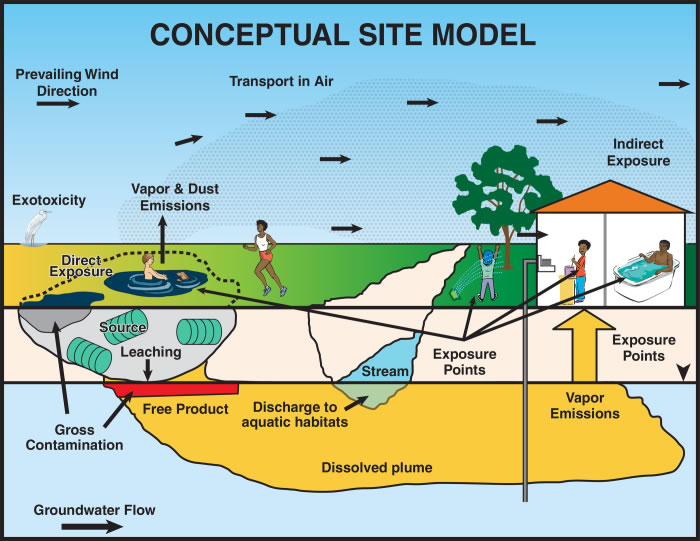
TABLE OF CONTENTS
- UST Law and Policy
- Assessment, Cleanup, and Closure
- UST Cleanup Fund
- Online Database
- Regional Water Board UST Program Contacts
- County UST Program Contacts
UST Law and Policy
State regulations regarding underground tank construction, monitoring, repair, closure, release reporting, and corrective action are contained within CCR Title 23, Chapter 16.
Implementation of the UST Program is unique, as the Health and Safety Code Division 20, Chapters 6.7 and 6.75, gives local agencies the authority to oversee investigation and cleanup of UST leak sites. The Corrective Action regulations (CCR, Title 23, Chapter 16, Article 11) use the term "regulatory agency" in recognition of the fact that local agencies have the option to oversee site investigation and cleanup, in addition to their statutory mandate to oversee leak reporting and tank closure.
The Regional Water Board works in partnership with Local Oversight Programs (LOPs) to oversee the cleanup of UST cases. LOPs are local agencies certified by the State Water Resources Control Board to oversee the implementation of cleanup. The Regional Water Board serves as the lead oversight agency when various circumstances make it a better fit for oversight. Click here for a list contact information for the different LOPs in California.
Assessment, Cleanup, and Closure
Assessment and cleanup is governed by the Porter Cologne Water Quality Control Act (Water Code) and Chapter 16 (Article 11) of the Underground Storage Tank Regulations. Results of the assessment provide details about the size and magnitude of the release and are used to determine an appropriate cleanup strategy. A good site assessment study can be used to recommend one of several cleanup alternatives (feasibility study). Click here for a list of site assessment publications.
Cleanup
Cleanup is conducted under the direction of the lead regulatory agency and may include free product removal, vapor extraction, enhanced bioremediation, bioventing, and monitored natural attenuation. In some cases, soil excavation and disposal completes the cleanup. Click here for a list of cleanup publications.
Evaluating alternative cleanup technologies requires an understanding of site specific conditions and the nature and extent of the contamination. Data from site assessment studies can be used to recommend one of several cleanup alternatives. Conducting extended interim remedial actions without concurrent evaluation of alternative cleanup technologies should be avoided. A responsible party must be aware of inherent limitations of a chosen cleanup alternative given the specific conditions of the site. Finally, the evaluation of alternative cleanup technologies should include cleanup objectives and estimated times to reach those objectives.
Closure
A UST site qualifies to receive a "No Further Action" (closure) letter once the owner or operator meets all appropriate corrective action requirements. After this occurs, the local regulatory agency or Water Board will inform the responsible party in writing that no further work is required.
On May 1, 2012, the State Water Board adopted the Low-Threat Underground Storage Tank Case Closure Policy. See State Water Board Resolution No. 2012-0016. The Policy applies to petroleum UST sites subject to Chapter 6.7 of the Health and Safety Code. The Policy establishes both general and media-specific criteria. If both the general and applicable media-specific criteria are satisfied, then the leaking UST case is generally considered to present a low threat to human health, safety and the environment. The Policy recognizes, however, that even if all of the specified criteria in the Policy are met, there may be unique attributes of the case or site-specific conditions that increase the risk associated with the residual petroleum constituents. In these cases, the regulatory agency overseeing corrective action at the site must identify the conditions that make case closure under the Policy inappropriate. Prior to the Policy, UST case closure often relied generally on the 1996 Supplemental Instructions. Today, the Supplemental Instructions can be used as guidance in support of the Policy.
UST Cleanup Fund
The Barry Keene Underground Storage Tank Cleanup Fund Act of 1989 (Cleanup Fund) was created by the California Legislature, and is administered by the State Water Board, to provide a means for petroleum UST owners and operators to meet the federal and state requirements and to have their cleanup costs reimbursed by the UST cleanup fund. For more information visit the State Water Board’s UST Cleanup Fund webpage.
Online Database
You can find information on sites overseen by the Water Board and County Health agencies by visiting GeoTracker, our on-line site cleanup database. Once there, select the "site/facility finder" button and use the search tool to find the site you are interested in.
UST Program Contacts
| UST Program Water Board Contacts | |
| County | Water Board Contact |
|---|---|
| Marin | Jared Wilson (510) 622-2346 |
| Sonoma | Angus Chan (510) 622-2363 |
| Napa | Joannie Wang (510) 622-2441 |
| Solano | Joannie Wang (510) 622-2441 |
| Contra Costa | Kevin Brown (510) 622-2358 |
| Alameda County Water District | Lauren Kahapea (510) 622-2343 |
| Alameda - (LOP liaison) | Cherie McCaulou (510) 622-2342 |
| Santa Clara (LOP liaison) | John Wolfenden (510) 622-2444 |
| San Mateo (LOP liaison) | Kimberlee West (510 622-2432 |
| San Francisco | Sunny Grunloh (510) 622-2350 |
Please make sure you conducted a search on GeoTracker for the underground storage tank site you are calling about. Thank you.
County UST Program Contacts
Alameda County | Contra Costa County | Marin County | Napa County | San Francisco County | San Mateo | Santa Clara | Solano County | Sonoma County
Alameda County (LOP)
1131 Harbor Bay Parkway, 2nd Floor
Alameda, CA 94502
Attn: Ronald Browder - Acting Chief, Hazardous Materials
Tel: (510) 567-6777
Dilan Roe, Local Oversight Program Manager
Tel: (510) 567-6767 Email: dilan.roe@acgov.org
43885 South Grimmer Boulevard
Fremont, CA 94538
Attn: Ms. Michelle Myers, Groundwater Resources Manager
Tel: (510) 668-4454 Email: Michele.Myers@acwd.com
Contra Costa County
4333 Pacheco Boulevard
Martinez. CA 94553
Attn: Randall Sawyer, Director, Hazardous Materials Programs;
Paul Andrews or Jerry Yoshioka, UST Program
Tel: (925) 646-2286 Email: ccchazmat@hsd.cccounty.us
Marin County
P O Box 4186
899 Northgate Drive, Suite 100
San Rafael, CA 94903
Attn: Julia Barnes, Supervising Hazardous Materials Specialist
Tel: (415) 473-7085 Email: JBarnes@marincounty.org
Napa County
Hazardous Materials Division
1195 Third Street, Room 101
Napa, CA 94559-3082
Attn: Ms. Jackie Bertaina, Senior Hazardous Materials Specialist
Tel: (707) 253-4471 Email: jbertain@co.napa.ca.us
San Francisco County
Environmental Health Section
1390 Market Street, Suite 210
San Francisco, Ca 94102
Attn: Ms. Stephanie Cushing, Program Manager, Contaminated Site Assessment and Mitigation Program
Tel: (415) 252-3926 Email: stephanie.cushing@dph.sf.ca.us
San Mateo County (LOP)
Environmental Health Services Division
2000 Alameda de las Pulgas, Suite 100
San Mateo, CA 94403
Attn: Mr. Greg Smith, Groundwater Protection Program Supervisor
Tel: (650) 372-6279 Email: gjsmith@smcgov.org
Santa Clara County (LOP)
1555 Berger Drive, Suite 300
San Jose, CA 95114
Attn.: Ms. Jennifer Kaahaaina, Hazardous Materials Program Manager
Tel: (408) 918-4795 Email: Jennifer.kaahaaina@cep.sccgov.org
Solano County
675 Texas Street
Fairfield, CA 94533
Attn: Misty Kaltreider, Engineering Geologist
Tel: (707) 421-6770 Email: MKaltreider@solanocounty.com
Sonoma County
625 5th Street
Santa Rosa, CA 95405
Attn: Leslye Choate, Environmental Health Program Manager
Tel: (707) 565-6546 Email:Leslye.Choate@sonoma-county.org

